Bill Boyd
Wreck · Fort Lauderdale
26° 09.110' N 80° 03.885' W
 Technical Hypoxic Trimix Max 285 ft Avg 250 ft Hot Drop
Today AMPoor
Details
Technical Hypoxic Trimix
Minimum recommended certification
- Max depth
- 285 ft
- Average depth
- 250 ft
- Access
- Hot Drop
- Sea state today
- AMPoor PMPoor
Pictures 4
Where it is
26° 09.110' N 80° 03.885' W
Next boats to this site 0
No confirmed trips to this site are listed yet.
Operators that dive here

Best Gas


Gas prices
| Diluent tank | $35.50 |
| O2 tank | $10.00 |


Gas prices
| Aluminum 80 | $10 |
| Steel HP 100 | $10 |
| Steel LP 85 | $10 |
Wreck Details
Sunk July 18, 1986
Freighter
211 ftLength
? ftBeam
Site description
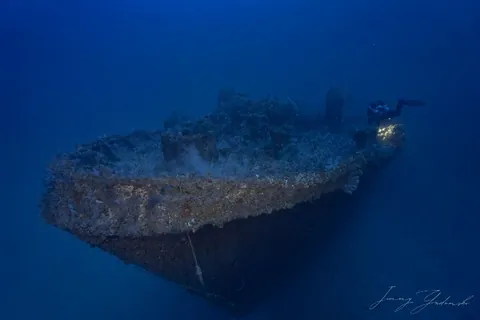
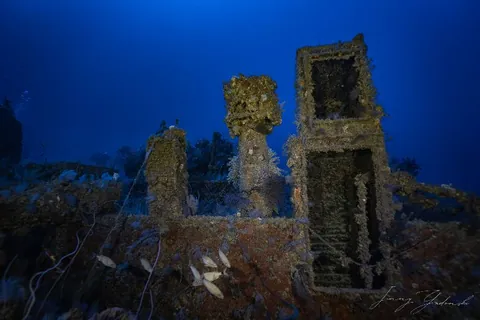
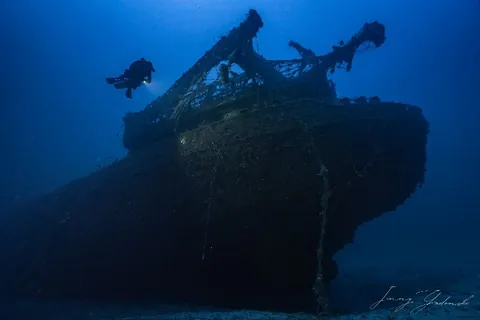
The Bill Boyd, originally christened the Heino, was a German freighter built in Hamburg in 1964. It was later renamed several times, going by the names Maude Wonsild, Mauds Isa, Hem Berto, Marilyn, and finally Nata. On July 18, 1986, the Bill Boyd was intentionally sunk off the coast of Fort Lauderdale, Florida, to serve as an artificial reef. Today, it lies upright on the sea floor at a depth of about 285 feet, making it accessible only to technical divers. The wreck remains mostly intact.
Route & typical conditions
Route
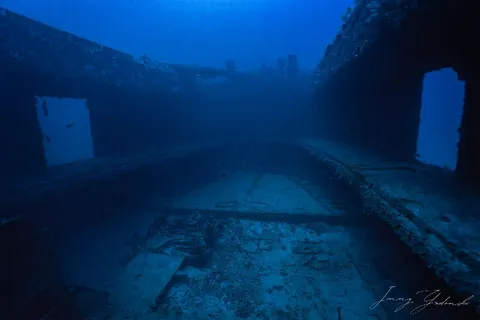
The Bill Boyd, now resting silently on the ocean floor, lies at a depth of 285 feet. Its bow points southward, while the stern section faces north at a slightly shallower depth of 275 feet. The main deck sits approximately 250 feet below the surface.
Divers exploring the wreck will encounter intriguing features:
Pickup Truck: Within the forward cargo hold, a pickup truck awaits discovery. Its hood is missing, revealing the exposed engine—a testament to the ship’s past life as a working vessel.
Shipping Containers: Both forward and aft holds contain shipping containers. These metal giants provide shelter for marine life and serve as intriguing dive sites.
Marine Life: While the invertebrate and gorgonian growth isn’t as lush as on shallower wrecks, the Bill Boyd attracts amberjack, grouper, and snapper. These fish add vibrancy to the underwater scene.
Lionfish Warning: Exercise caution when exploring the wreck, as lionfish have made it their home. Their striking appearance and venomous spines require respectful distance.
The Bill Boyd’s transformation from cargo ship to artificial reef has created a unique underwater habitat, inviting divers to explore its secrets.
Typical conditions
Divers may encounter a wide range of surface currents ranging from light to strong. However, at greater depths, the current tends to be minimal. Due to the depth and particulate matter in shallower waters, visibility can be limited. Divers should carry both a primary and secondary torch for illumination. If you’re capturing photographs, using flash or video lights is essential.
As you descend toward the wreck, you might pass through thermoclines—distinct layers of water with varying temperatures. These can create interesting transitions as you explore. Surface waters in summer can reach up to 87°F (30.6° C), but the temperature around the wreck may drop significantly. Prepare for water temperatures in the low 60s° F (15-18° C).
Wreck history

The freighter was sunk off Fort Lauderdale as an artificial reef and memorial to the late Fort Lauderdale tackle shop owner, Bill Boyd. Boyd was a cornerstone of the fishing community in Fort Lauderdale for more than 40 years. The ship was berthed on the Miami River for a while until the previous owner defaulted on a repair bill. The freighter, then known as the Nata, was purchased from Arc Navigation by the Broward County Artificial Reef Program on behalf of the Boyd family and moved to Port Everglades where it was cleaned and prepared to be an artificial reef.
Name History:
Heino (1964)
Maude Wonsild
MaudeIsa
Hehmberto
Marilyn
Nata
Bill Boyd
Divers' uploaded pictures
No diver pictures yet.