Dive Sites
Browsing as a guest. Create a free account to save trips and plan dives.

City of Washington

Wreck · Key Largo

25° 08.788' N 80° 15.355' W

Open Water Open Water Max 26 ft Avg 21 ft Permanent Mooring Balls Today AMNo dive

Details

Open Water
Minimum recommended certification
Max depth
26 ft
Average depth
21 ft
Access
Permanent Mooring Balls
Sea state today
AMNo dive PMNo dive

Video

🎥 FloridaKeysTV

Pictures 3

Where it is

25° 08.788' N 80° 15.355' W

Next boats to this site 32

See all departures

Operators that dive here

Best Gas

atm
atm
Overlay Image
Gas prices
Aluminum 80 $10
Steel HP 100 $10
Steel LP 85 $10

Wreck Details

Sunk July 10th, 1917
Steamer
325 ftLength
28 ftBeam

Site description

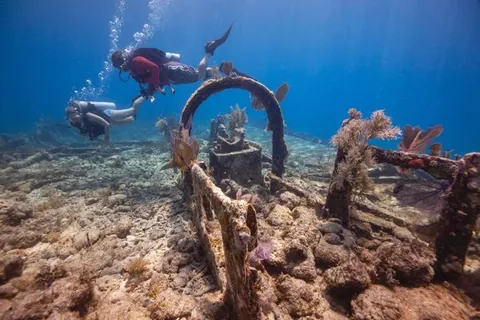
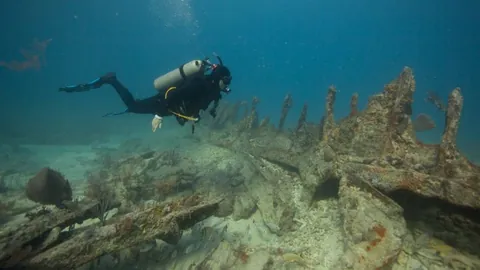
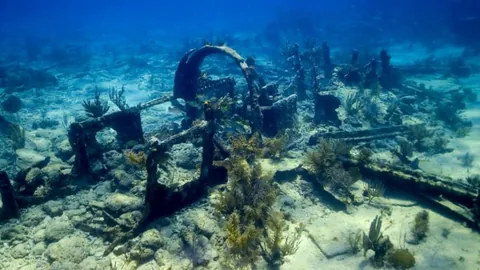
Elbow Reef boasts one of the most popular wreck sites—the City of Washington. Originally a schooner, this vessel was later converted into a steamship. Constructed in 1877, it featured two masts and a small engine, spanning 320 feet in length with a 38-foot beam. The City of Washington plied routes between New York, Cuba, Panama, and Mexico, ferrying both passengers and freight. Despite significant deterioration, remnants of the hull and keel remain visible. The debris field extends over 325 feet, making it an ideal spot for snorkeling and night dives due to its shallow depths. Marine life thrives here, including barracuda, morays, and nurse sharks. These creatures, accustomed to hand-feeding by divers over the years, exhibit little fear, providing an excellent opportunity for underwater photographers to capture their majesty in their natural habitat.

Route & typical conditions

Route

Operators may use mooring balls E9 (south end) or E10 (north end). This site can be explored on a single dive.

Typical conditions

Conditions are typically exceptional in this site. Visibility ranges from 60 to 100 feet and currents are very mild. If surface conditions are choppy, divers may feel surge underwater.

Wreck history

City of Washington historic photo
Built in 1877, this vessel measured 320 feet in length, had a beam of 38 feet, and featured three decks capable of accommodating 400 passengers and crew members. Originally equipped with a compound surface condensing engine, it later received an upgrade in 1889 to a more powerful triple expansion steam engine. The ship was also rigged as a hermaphrodite brigantine, characterized by a square-rigged foremast and a fore-and-aft rigged mainsail. Pirates favored this style because it required fewer crew members to operate. In non-pirate contexts, this rigging was advantageous for efficient sailing. Combining engine power and sails, the vessel achieved impressive speed, completing the journey from New York to Havana in just 73 hours. Unlike many other ships that met their demise on Florida’s reefs, this vessel enjoyed a lengthy and illustrious career. It shuttled cargo and passengers between New York, Cuba, Mexico, and Panama. In 1898, it played a significant role during the Spanish-American War when the USS Maine exploded near it in Havana Harbor. The vessel, along with the Alfonso XII, rescued 100 crew members from the burning USS Maine. Its dining salon even served as a temporary hospital for the injured sailors. This incident fueled public outrage, leading Congress to declare war on Spain. During the war, the City of Washington, hired by the US Army Quartermaster Department, transported troops and supplies from April to September 1898. After military service, the vessel resumed its civilian duties until retirement in 1908. In 1911, it was repurposed as a coal barge, marking the end of its glory days. On July 10, 1917, tragedy struck when it and the Seneca foundered on Elbow Reef while being towed by the Luckenback 4. Although the other two vessels were refloated, this one sank within minutes—a swift conclusion to its years of navigating treacherous waters and Florida Keys reefs.
Divers' uploaded pictures

No diver pictures yet.

Divers' reviews

Be the first to add a review