Dive Sites
Browsing as a guest. Create a free account to save trips and plan dives.

Delray Ledge

Reef · Boynton Beach

26° 28.169' N 80° 02.639' W

Open Water Open Water Max 60 ft Avg 40 ft Hot Drop Today AMPoor

Details

Open Water
Minimum recommended certification
Max depth
60 ft
Average depth
40 ft
Access
Hot Drop
Sea state today
AMPoor PMPoor

Video

🎥 SOFLSCUBA

Pictures 1

Where it is

26° 28.169' N 80° 02.639' W

Next boats to this site 7

Operators that dive here

Best Gas

atm
atm
Overlay Image
Gas prices
Aluminum 80 $10
Steel HP 100 $10
Steel LP 85 $10

Site description

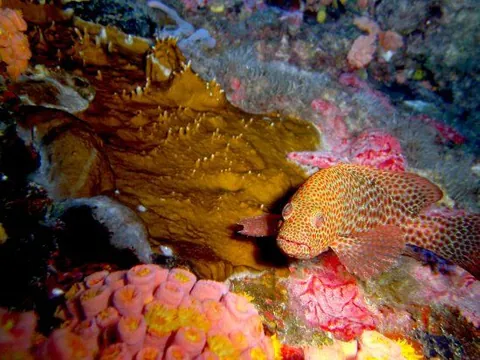
Western Ledge: This section of the reef runs parallel to the shore on the west side. Imagine a distinct, 10 to 12-foot-tall ledge that stretches the entire length. It’s like a natural underwater balcony! As you explore this ledge, you’ll notice it’s undercut in many places, creating cozy nooks and crannies. These small caves and overhangs are perfect hiding spots for reef creatures. Open water divers of all experience levels can easily drift along this ledge. Keep your eyes peeled for ocean triggerfish, schoolmaster snapper, and even the graceful nurse sharks. Yellowhead jawfish dart around the sandy seafloor at the base of the ledge, while schools of creole wrasse dance in the water column above. Eastern Spur and Groove Formations: Now, let’s turn our gaze eastward, facing the open ocean. Here lies a more intricate realm—the spur and groove formations. These underwater ridges and valleys create a mesmerizing landscape. Picture narrow channels and raised sections of reef, like Mother Nature’s own architectural masterpiece. Divers with greater experience will appreciate the challenge here. The slightly greater depth and the need for navigation through the spurs and grooves make it an exciting adventure. Seafans, barrel sponges, and soft corals dominate the crests of these formations. In the troughs, narrow strips of sand and rubble connect with the sandy plateau at the center of the reef. The Northern Hook: As we venture northward, the reef takes a dramatic turn. The single ledge transitions into a double ledge, forming a large hook shape. Imagine swimming along the top ledge, which heads north, while the lower ledge curves westward. They can be as much as 200 feet apart at their widest point! Inside the hook, a raised plateau shelters soft corals, gorgonians, and small coral heads. It’s like a secret garden beneath the waves. The leading edge of the hook consists of ridges that run from east to west. Crests reach around 50 feet deep, while troughs dip to 53 feet. Keep an eye out for the sharp transition between reef and sand—it’s a visual feast. And don’t miss the sand-bottomed channel that feeds back into the central area of the hook.

Route & typical conditions

Route

Most divers follow the prevailing currents, drifting from south to north along the ledge. The exact drop site location depends on the dive operator and current strength. If you’re curious about the deeper spur and groove area, consider swimming up and over the reef to the east before continuing your northward drift. However, for many divers, the initial exploration begins right here—the easy-to-follow ledge. It’s like a scenic underwater pathway waiting to be explored. As you continue northward, something intriguing awaits: the hook formation. Picture a large, natural hook shape formed by the reef. Now, you have choices. Follow the top ledge as it heads north. This route offers its own wonders—a mesmerizing underwater landscape. Alternatively, explore the lower ledge that curves toward the leading edge of the hook. Both options promise plenty to see and discover. With its variety of routes and captivating marine life, it’s no wonder divers return to Delray Ledge Reef time and again.

Typical conditions

Conditions are often really good in this site. Current are typically moderate to strong, but given this dive is usually done as a drift, current don't pose a big problem. Visibility is also really good tanging from 50 to 90 feet.

Divers' uploaded pictures

No diver pictures yet.

Divers' reviews

Be the first to add a review