Dive Sites
Browsing as a guest. Create a free account to save trips and plan dives.
+2 photos

Hannah M Bell

Wreck · Key Largo

25° 08.673' N 80° 15.393' W

Open Water Open Water Max 33 ft Avg 21 ft Permanent Mooring Balls Today PMNo dive

Details

Open Water
Minimum recommended certification
Max depth
33 ft
Average depth
21 ft
Access
Permanent Mooring Balls
Sea state today
AMNo dive PMNo dive

Video

🎥 Pablo Strika

Pictures 5

Where it is

25° 08.673' N 80° 15.393' W

Next boats to this site 12

See all departures

Operators that dive here

Best Gas

atm
atm
Overlay Image
Gas prices
Aluminum 80 $10
Steel HP 100 $10
Steel LP 85 $10

Wreck Details

Sunk April 4th, 1911
Steamer
315 ftLength
38 ftBeam

Site description

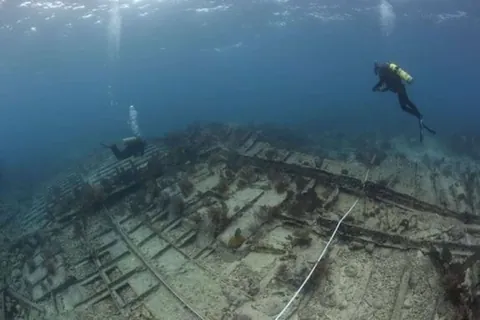
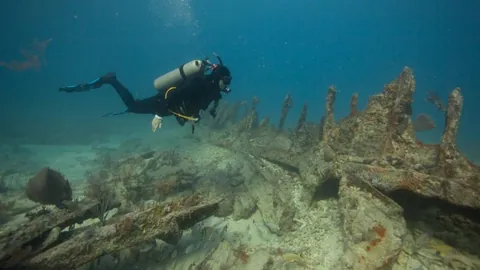
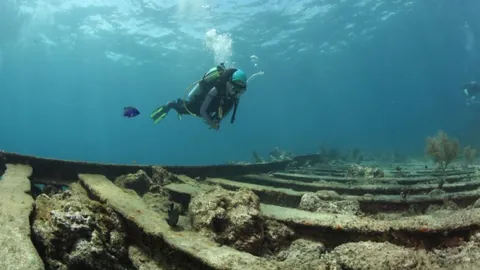
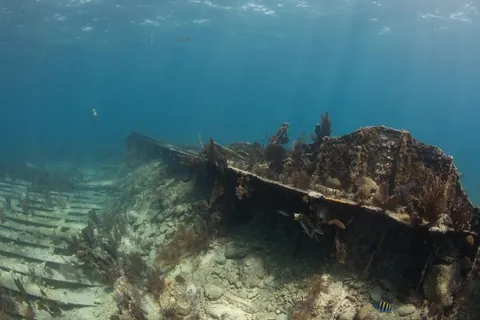
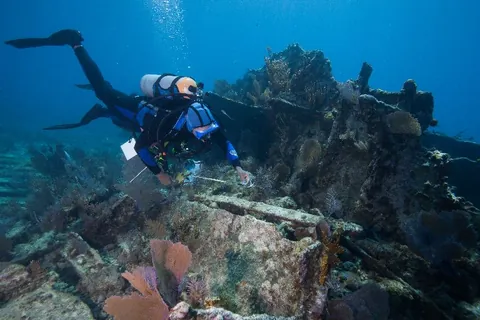
The Hannah M. Bell, also known as "Mike’s Wreck", lies just one hundred yards east of Elbow’s lighthouse. This enigmatic steel-hulled barge rests between marker buoys E7 and E7. Its ship history remains a subject of heated debate and speculation. Many believe it to be the remnants of neighboring wrecks like the Tonawanda, Train Wreck, or Civil War Wreck. Today, the reef has engulfed significant portions of its bow and stern, while smaller sections are strewn across the site. The wreckage now serves as a haven for various reef fish, which inhabit the small steel pipes and other remnants of the original ship. With crystal-clear waters due to the Gulf Stream, shallow depths, and a white sandy bottom, Mike’s Wreck ranks among the best spots for macroscopic underwater photography. Divers frequently encounter parrotfish, angelfish, and butterflyfish in this area.

Route & typical conditions

Route

Heading south along the channel for about 20 feet leads to the beginning of Mike’s wreck. This captivating wreck lies at a depth of approximately 25 feet. Divers are encouraged to explore the entire length of the wreck until they reach its end. As they do so, the reef line gradually rises ahead, revealing another sand channel on the opposite side. Upon reaching this point, divers can turn around and retrace their path along the wreck, eventually arriving back at the sand channel where the boat is moored. For those with sufficient air supply, venturing beyond the entrance into the larger sand channel is highly rewarding. Here, lobsters hide among the rock formations, and occasionally, a nurse shark makes an appearance. Depending on the orientation of the dive boat, it may often be positioned directly above this channel. At the very end of the extended channel lies a cannon.

Typical conditions

Conditions are often really good in this site. Given its proximity to the gulf stream, visibility tends to range from 60 to 100 feet. Very mild currents, but occasional surge can be present if surface conditions are choppy.

Wreck history

Hannah M Bell historic photo
On April 4, 1911, the 315-foot Hannah M. Bell ran aground approximately six miles off the coast of Key Largo, Florida. Laden with coal and bound for Veracruz, Mexico, the ship had been constructed in England in 1893. Over the years, it had undertaken frequent transatlantic voyages, connecting Europe with the East and Gulf coasts of the United States, the Caribbean, and South America. Remarkably, no lives were lost during the wreck, but by May, relentless weather and powerful waves had disintegrated the vessel. For decades, both local residents and curious visitors explored the mysterious shipwreck without knowledge of its name or backstory. It wasn’t until 2012 that the National Oceanic and Atmospheric Administration’s (NOAA) Office of National Marine Sanctuary, in collaboration with the National Association of Black Scuba Divers, officially confirmed the ship’s identity. So, how was this century-old enigma unraveled? In the 1980s, Mike Butler, a dive boat operator based in Key Largo, brought attention to the dive site, which eventually became known as ‘Mike’s Wreck.’ This site served as the final resting place not only for the unidentified ship but also for an array of marine life, including fish and coral. However, it wasn’t until 2009 that Matthew Lawrence, a maritime archaeologist affiliated with Stellwagen Bank National Marine Sanctuary in Massachusetts, explored the site during a dive, initiating the quest to uncover the shipwreck’s history. The unknown vessel lay near the wrecks of the USS Arkansas and the City of Washington, close to what is now known as Elbow Reef. The shallower reefs in this area, along with the ships they have claimed over time, have contributed to numerous groundings and wrecks. In fact, the Florida Keys National Marine Sanctuary estimates that there are approximately 1,000 shipwrecks scattered throughout the Florida Keys. For nearly three years, Lawrence, assisted by volunteers from the National Association of Black Scuba Divers and the Florida Keys National Marine Sanctuary, meticulously combed through newspaper archives, shipping records, and historical documents. By comparing these findings with photographs of the wreck site, they pieced together the sunken ship’s past. Finally, on November 20, 2012, the Office of National Marine Sanctuaries officially announced the confirmation of the wreck’s identity: it was indeed the Hannah M. Bell.
Divers' uploaded pictures

No diver pictures yet.

Divers' reviews

Be the first to add a review