

Lakeland
Wreck · Miami Beach
25° 42.068' N 80° 05.005' W
 Technical Air Max 140 ft Avg 120 ft Hot Drop
Today PMPoor
Details
Technical Air
Minimum recommended certification
- Max depth
- 140 ft
- Average depth
- 120 ft
- Access
- Hot Drop
- Sea state today
- AMPoor PMPoor
Video
🎥 ISDC
Pictures 10
Where it is
25° 42.068' N 80° 05.005' W
Next boats to this site 0
No confirmed trips to this site are listed yet.
Operators that dive here


Best Gas


Gas prices
| Diluent tank | $35.50 |
| O2 tank | $10.00 |
atm
atm


Gas prices
| Aluminum 80 | $10 |
| Steel HP 100 | $10 |
| Steel LP 85 | $10 |
NDL at is
24 hr min surface interval
Always use a dive computer
Wreck Details
Sunk June 16th, 1982
Landing Dock Ship
200 ftLength
35 ftBeam
Site description
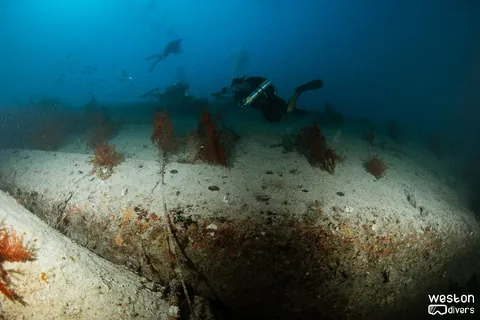
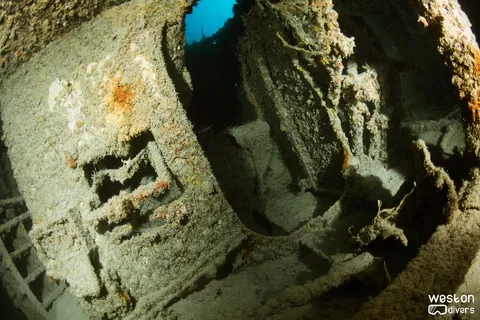
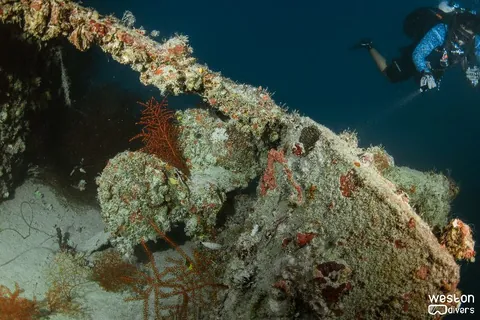
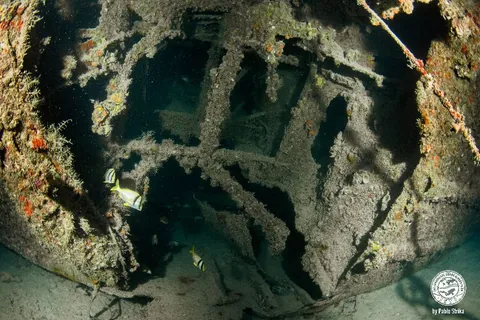
This is one of the very few wreck that is completely upside down in south Florida. The dive site itself is probably the less attractive to divers compared to the neighbors Etoile de Mer, Miguana and Bradywine (and even Tacoma).
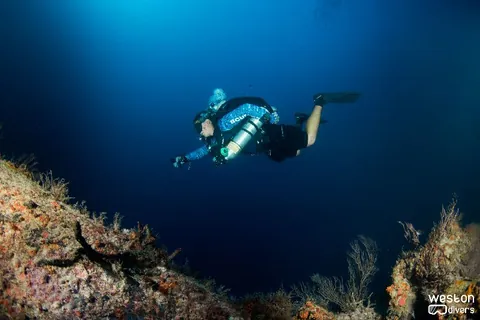
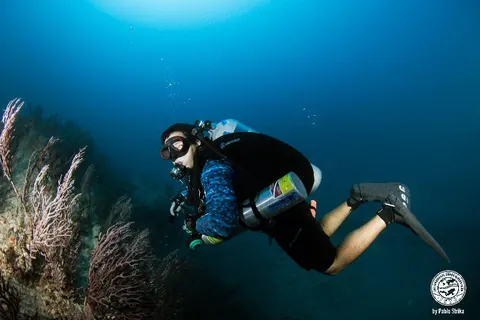
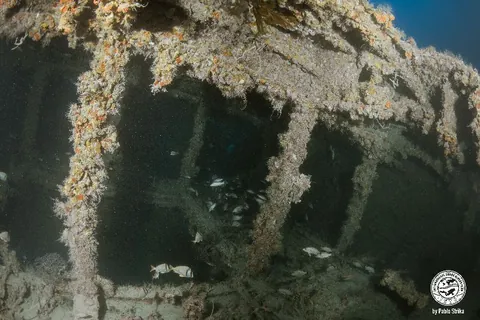
But this wreck is full of life. Schools of tropical fish will always be swimming around this site.
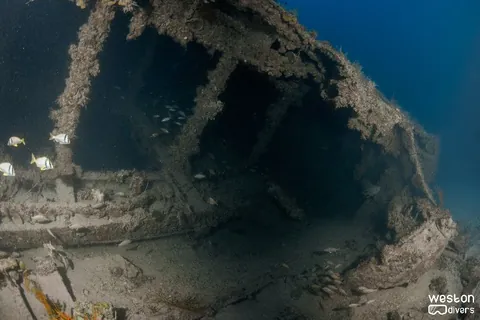
Penetration is possible and recommended only for certified divers. The wreck sits near a field of debris that attract large pelagic life like sharks and barracudas.
Route & typical conditions
Route
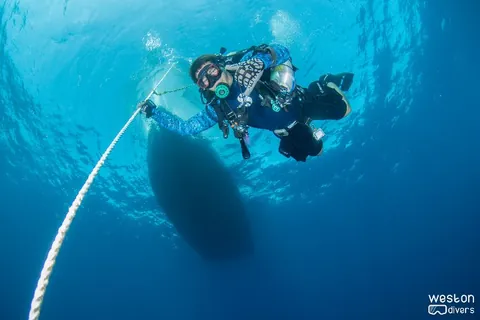
This dive is usually done as a drift and starting with a hot drop - although some operators will deploy a descend line in occasions.
After a couple of laps on the feature less hull, divers may want to explore the interior of the wreck. It really makes it a nice experience to penetrate a wreck that is completely upside down. Divers may get disoriented, but it is definitely a good practice for all advanced divers.
Typical conditions
Current can be strong in this site. Given the site sits mostly west to east, the north part of the wreck offers some shelter in the typical north currents. Visibility ranges from 30 to 60 feet.
Wreck history

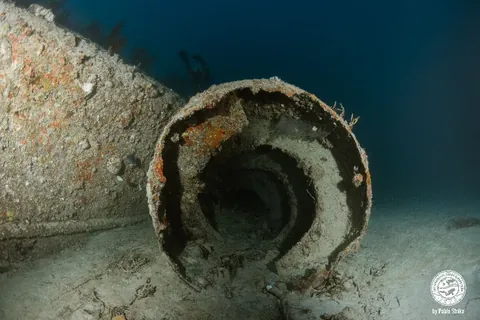
The Lakeland was originally laid down on December 9, 1944, at Brown Shipbuilding Company’s Houston, Texas, shipyard as LSM‐373. The LSM (Landing Ship, Medium) was 203.5 feet in length and 34.5 feet in beam, displaced 1,095 tons when fully loaded, and was powered with twin Fairbanks Morse direct‐drive diesels. She had the capacity to carry five medium or three heavy tanks, six tracked landing vehicles, or nine DUKW amphibious trucks, as well as almost 50 troops. Launched less than three weeks later on December 30, LSM‐373 conducted her shakedown cruise in early 1945 before departing for the Pacific Theater on March 4, 1945. After passing through the Panama Canal, she reached Eniwetok Atoll in the Marshall Islands onMay4. During the final weeks of World WarII, LSM‐ 373 participated in operations in the Marianas, Solomons, and Okinawa. After the Japanese surrender, the landing ship transported troops and supplies for occupation forces in Korea and China throughout 1945 and into early 1946. LSM‐373 eventually returned to the United States, and after decommissioning on October 14, 1946, she was placed in the Atlantic Reserve Fleet at Green Cove Springs. On February 28, 1958, LSM-373 was recommissioned at the Charleston Naval Shipyard in South Carolina to serve asa logistic supply ship. On October 14, 1959, she was renamed U.S.S. Lakeland, however, she was decommissioned the following month and struck from the Naval Register in January 1960. The Portsmouth Salvage Company in Chesapeake, Virginia, purchased the surplus landing ship on October 6, 1960. The Lakeland was converted for use asan inter-island freighter, and was employed for over two decades before finally being scuttled as an artificial reef off Miami on June 16, 1982. The Lakeland now rests almost completely upside down in 135 feet of water and is oriented with her bow pointing west. While the inverted hull does not present an appealing dive visually, there are numerous penetration points that allow access under and i n t o the interior of the vessel. An extensive debris field can be found extending from the wreck; to the north, numerous cement mixer drums that were also deployed to serve as artificial reef material can be found scattered a long the bottom. These were actually deployed a considerable distance from the Lakeland, but Hurricane Andrew tumbled them along the bottom towards the freighter.
Divers' uploaded pictures
No diver pictures yet.