Dive Sites
Browsing as a guest. Create a free account to save trips and plan dives.
+5 photos

RSB-1

Wreck · Pompano Beach

26° 13.642' N 80° 03.896' W

Advanced Open Water Advanced Open Water Max 120 ft Avg 100 ft Temporary Line Today AMPoor

Details

Advanced Open Water
Minimum recommended certification
Max depth
120 ft
Average depth
100 ft
Access
Temporary Line
Sea state today
AMPoor PMPoor

Video

🎥 ISDC

Pictures 8

Where it is

26° 13.642' N 80° 03.896' W

Next boats to this site 20

See all departures

Operators that dive here

3D Model

Visit "By The C Media" website

📸 Candice Heizman

Best Gas

atm
atm
Overlay Image
Gas prices
Aluminum 80 $10
Steel HP 100 $10
Steel LP 85 $10

Wreck Details

Sunk April 23rd, 1994
Workboat
160 ftLength
36 ftBeam

Site description

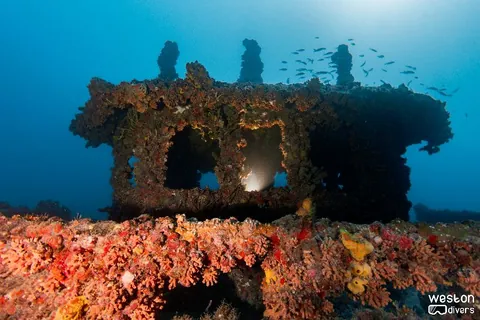
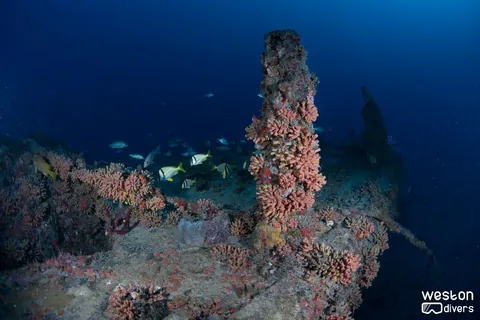
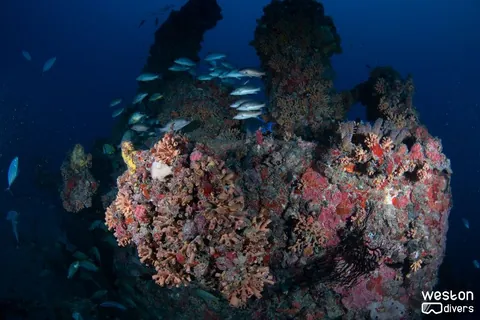
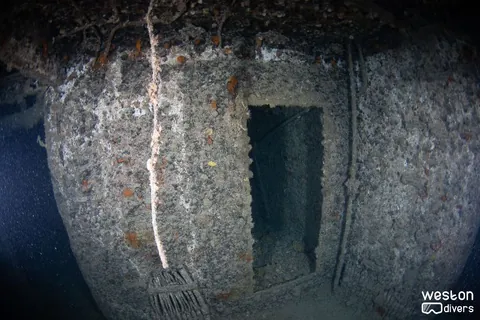
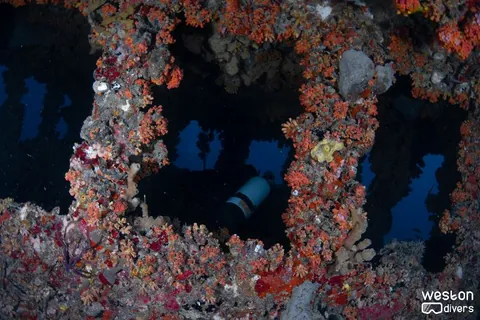
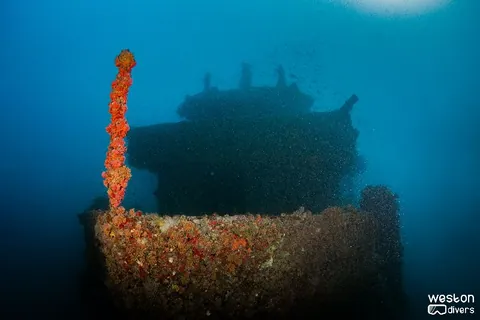
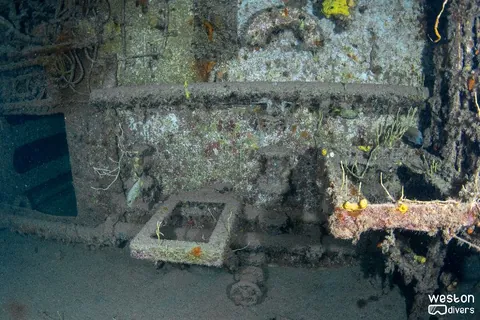
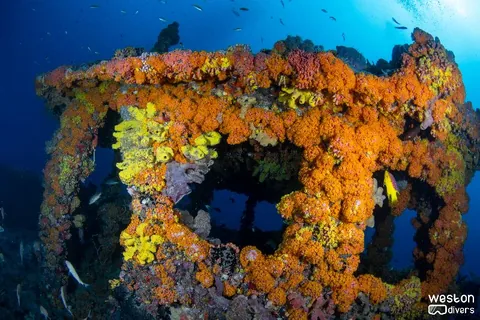
RSB-1, a 160-foot (49-meter) oil company tender constructed in 1966, was acquired by the U.S. Navy in 1971. It served as a range support ship at the Naval Warfare Center in Fort Lauderdale. Following decommissioning, Broward County’s artificial reef program purchased RSB-1 with the intention of sinking her as an artificial reef. The vessel is also known as the Jim Torgerson, named after a former member of the Broward sheriff’s Bomb and Arson Unit. Jim Torgerson, a passionate diver, played a pivotal role in scuttling several Broward County wrecks, including RSB-1. A memorial plaque on the bridge commemorates Torgerson, who defied the odds and witnessed the sinking of his namesake despite battling multiple myeloma. On April 23, 1994, the wreck was successfully sent to the ocean floor using 49 pounds (22 kilograms) of explosives. Torgerson himself had the honor of “lighting the fuse.” Resting upright in 115 feet (35 meters) of water on a sandy seafloor, the wreck’s main deck lies at approximately 100 feet (30.5 meters), while the bridge reaches a depth of 77 feet (23.5 meters). The hull features strategically blown holes, allowing experienced divers easy access. The bridge and superstructure provide excellent opportunities to observe a diverse array of reef fish, including goliath grouper, schools of jacks, and solitary barracuda. The coral-encrusted wreck adds to the underwater ecosystem. 

Route & typical conditions

Route

Given the considerable depth of this sunken vessel, divers relying on compressed air find themselves with a restricted window of bottom time. The dive operator, well-versed in the intricacies of wreck exploration, strategically secures the line either to the sturdy bridge structure or the robust railing of the main deck. As divers descend along the taut line, the ocean world unfolds before them—a mesmerizing tableau of coral-encrusted surfaces, teeming with marine life. The wreck itself becomes a canvas for exploration. Circling the ship, divers trace its contours, their fins brushing against ancient metal and vibrant corals alike. Starting from the stern, they navigate back along the main deck, their buoyancy control allowing them to slip through openings and explore hidden nooks. The thrill lies in the possibility of penetration—venturing into the ship’s interior, where shadows dance and secrets linger. And then, as the dive nears completion, divers circle the forward superstructure. Here, near the bridge, marine residents gather—a bustling community of fish, each with its own story etched into the saltwater currents. The memorial plaque, affixed to the bridge, serves as a poignant reminder of Jim Torgerson’s legacy—a testament to human resilience and the indomitable spirit that defies both illness and depth. So, with every breath, divers absorb the history and life pulsating within these submerged steel walls. They emerge from the depths, salty and exhilarated, their memories woven into the fabric of RSB-1—a ship reborn as an underwater sanctuary.

Typical conditions

Conditions vary a lot in this site. Currents shall be expected and typically north. Visibility can range from 10 to 80 feet (or even more).

Wreck history

RSB-1 historic photo
Voyage Through History: The RSB-1 🚢 Launched in 1965: The Birth of RSB-1 The RSB-1, a vessel born in the shipyards of Bishop Marine Service at Port Aransas, Texas, set sail in 1965. Her purpose? To serve the oil industry as an offshore crew and materials transport vessel—a silent workhorse navigating the waves. 🌊 1971: A Military Transformation The U.S. Navy recognized the potential of this maritime gem. They contracted with Tracor, Incorporated, who acquired the vessel and meticulously modified her equipment for military use. The RSB-1 was reborn, her destiny intertwined with naval operations. 🔗 1973: A Heroic Rescue Amidst the ocean’s unpredictable currents, the RSB-1 proved her mettle. In 1973, she played a pivotal role in rescuing two crew members from the Johnson Sea Link submersible. Entangled in the wreckage of the destroyer U.S.S. Fred T. Berry, the submersible faced peril. The RSB-1’s daring intervention earned her a place on the Supervisor of Salvage’s list—a testament to her ability to rescue downed submersibles. ⚓ 1976: Naval Service and Underwater Exploration The U.S. Navy officially welcomed the RSB-1 into its fold in 1976. With a civilian crew, she operated under the watchful eye of the Naval Surface Warfare Center, Fort Lauderdale Detachment. Her mission? To support the underwater test and evaluation range. Off the coast of South Florida and near Andros Island in the Bahamas, she delved into underwater mine testing and development—a silent guardian of the depths. 🔧 1992: The Final Chapter Time took its toll, and in 1992, the RSB-1 was retired from active service. Her engines quieted, her decks stilled, but her legacy endured. 🌊 1993: A New Purpose Beneath the Waves The Broward County Artificial Reef Program stepped in. In 1993, they welcomed the RSB-1 into their fold, transforming her into an underwater sanctuary. Her name echoed through history, evolving from Leo Wood, Jr. to A. B. Wood II, and finally settling on Range Support Boat #1 (RSB-1). 🌊 Diving into the Depths: The RSB-1 Dive Site On that fateful April 23, 1994, explosives reverberated through the vessel. In a mere three minutes, the RSB-1 descended to her final resting place—a watery grave 115 feet below the surface. Here, dedicated to U.S. Navy veteran and Broward County Sheriff James Torgerson, she stands upright and intact. Her steel hull cradles memories, her coral-clad form a haven for marine life—a silent witness to the ebb and flow of time beneath the waves.

Divers' uploaded pictures

Divers' reviews

profile_image
Pablo Strika
I love this wreck! It has a great penetration opportunity that takes you through the lower deck from the stern to the wheelhouse (completely dark!). Always full of file.
posted on 2026-10-04 12:32:26