


Dive Sites
Browsing as a guest. Create a free account to save trips and plan dives.

Shark Canyon

Reef · West Palm Beach

26° 51.770' N 80° 01.075' W

Advanced Open Water Advanced Open Water Max 80 ft Avg 72 ft Hot Drop Today AMPoor

Details

Advanced Open Water
Minimum recommended certification
Max depth
80 ft
Average depth
72 ft
Access
Hot Drop
Sea state today
AMPoor PMPoor

Video

🎥 PVDDiveandSurf

Pictures 1

Where it is

26° 51.770' N 80° 01.075' W

Next boats to this site 2

Operators that dive here

Best Gas

atm
atm
Overlay Image
Gas prices
Aluminum 80 $10
Steel HP 100 $10
Steel LP 85 $10

Site description

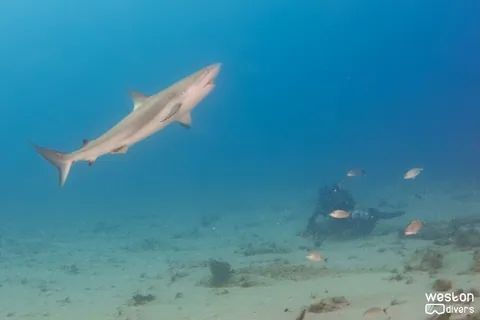
Shark Canyon, located 0.25 miles (0.4 kilometers) west of the reef ledge known as Juno Ledge, is named after its resident sharks. These include reef sharks, lemon sharks, and even bull sharks. You’ll often spot them around the two bowl-like amphitheaters at the southern end of the dive site. Interestingly, this area was once popular for shark chumming, but the practice was made illegal within 3 miles (5 kilometers) of the U.S. coast. Despite the cessation of chumming, sharks still frequent this site more than others. Divers can wait in the protection of the amphitheaters to observe these magnificent creatures cruising by. The amphitheaters are not fully enclosed. They back onto a relatively flat reef top at a depth of 73 feet (22 meters) and open to the south, where the ledge drops off to 95 feet (29 meters). This area features intriguing overhangs and undercuts. When currents are stronger, many divers skip the amphitheaters altogether and focus solely on the ledge. The southern amphitheater is smaller and slightly deeper at 80 feet (24.5 meters), while the northern amphitheater bottoms out at 78 feet (24 meters). The northern amphitheater has two tiers divided by a small step, with the eastern end slightly shallower at 77 feet (23.5 meters). The amphitheater bottoms consist of sand and coral rubble, with a few solitary coral heads scattered throughout. The walls are similar in coverage to the ledges found elsewhere in the area, adorned with hardy gorgonians and sponges clinging to the reef substrate. Continuing north, the main ledge offers sightings of snapper, parrotfish, grunts, and angelfish close to the ledge. Barracuda, turtles, and grouper are also commonly spotted. Stingrays frequent the sandy areas below the ledge.

Route & typical conditions

Route

The drop point for this site typically lies just south of the southernmost amphitheater on a flat stretch of algae-covered reef. Divers can navigate toward the main features by keeping east of the ledge on the flat reef crest. Upon reaching the first amphitheater, it’s helpful for divers to choose a position close to the reef that provides shelter from the current—though not so close that they risk damaging the reef or disturbing marine life. Many divers tuck in behind the lip of the amphitheater or linger near one of the larger coral heads at its center. Reef sharks often arrive within minutes of the divers’ descent. It’s important not to chase them; while they may approach within a few feet of a motionless diver, they startle easily if pursued. Spearfishers should also avoid spearing fish near the amphitheaters. The history of chumming at this site has made some sharks quite bold—they’ve even been known to steal catches from spearfishers. At the second amphitheater, divers can follow a similar strategy: settle close to the bottom and allow the reef sharks to approach naturally. As divers move north beyond the amphitheaters, the dive continues along the main ledge, where grouper, sea turtles, and various other marine life can be found.

Typical conditions

Visibility tends to be good - ranging from 50 to 70 feet. Currents are often moderate to strong - which poses a challenge for divers to remain in the amphitheaters waiting to spot sharks.

Divers' uploaded pictures

No diver pictures yet.

Divers' reviews

Be the first to add a review