
The Lionfish Invasion, and What Divers Can Actually Do About It
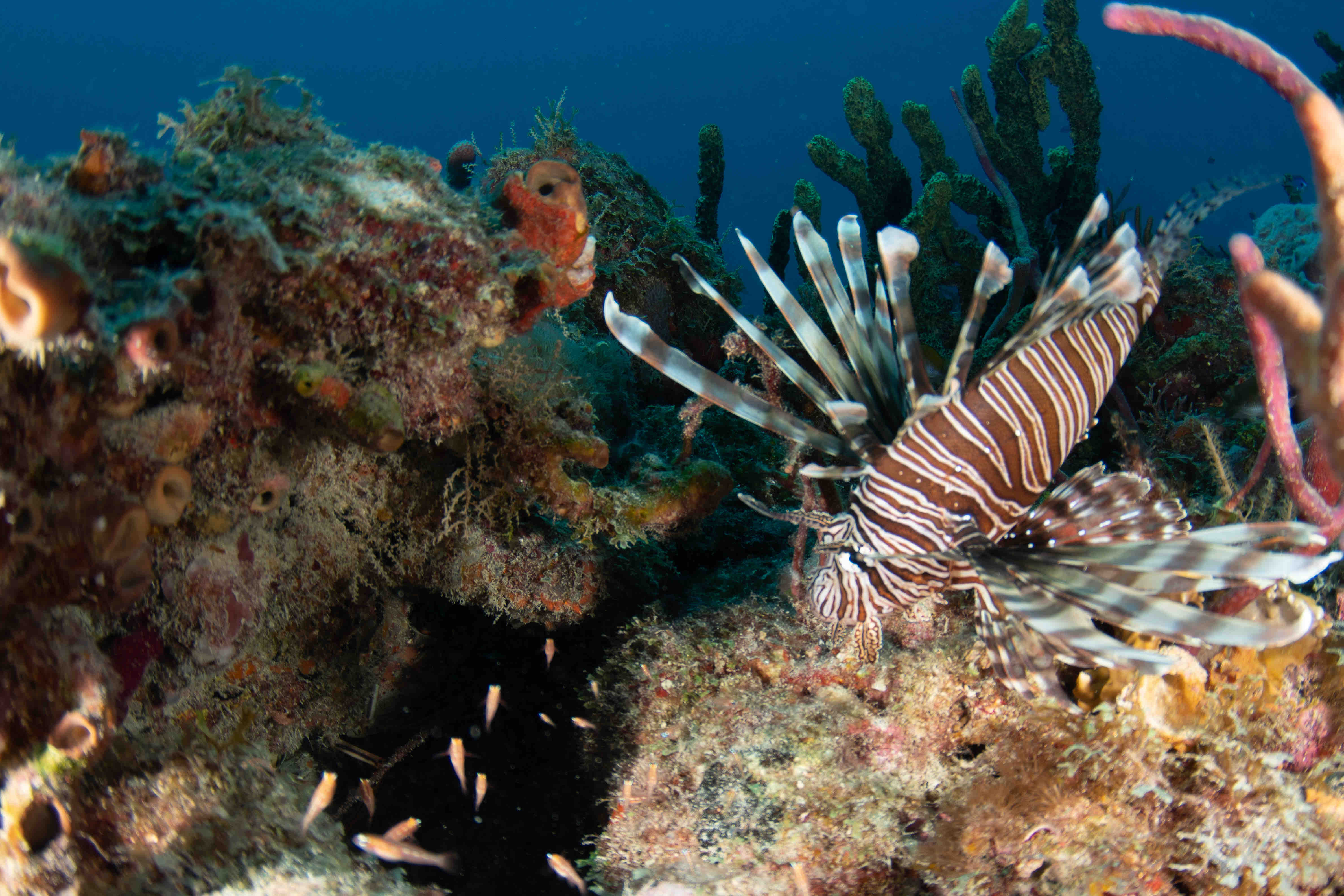
Every diver in South Florida has seen one - fins fanned, hanging under a ledge, completely unbothered. The lionfish is the most successful marine invader in the Atlantic, and the reason isn't that it's some kind of monster. It's that it does ordinary fish things in a place with no rules against it. Here's how it got here, why it wins, where you'll meet it, and how to get trained to take some out without making things worse.
Why this matters beyond one ugly fish
This isn't a squeamishness problem. Lionfish compete directly with the snapper, grouper and other reef predators that both the ecosystem and the region's fishing and diving economy depend on, and they eat the juveniles of those same species before they ever get the chance to grow into them. A reef that loses its plant-eating fish to a lionfish population loses its ability to keep algae in check, which is one of the more direct paths from a healthy reef to a degraded one. None of that shows up on a single dive - it shows up over years, on the reefs divers keep coming back to.
How they got here
The first confirmed Atlantic sighting is from 1985, off the South Florida coast. The leading explanation is aquarium releases - owners letting go of a fish that outgrew its tank, or ate everything else living in it. Lionfish are a popular, inexpensive aquarium fish precisely because they're dramatic and hardy, which is the same combination of traits that makes a released one dangerous in open water. It's the vector nearly every researcher lands on.
You'll also hear that Hurricane Andrew did it - six lionfish supposedly washed out of a broken beachfront aquarium into Biscayne Bay in 1992. It's a great story, and it's worth repeating specifically to correct it: the confirmed sightings start seven years before Andrew ever made landfall, so the storm can't be the origin, whatever role it may have played in spreading an already-established population later.
A third theory, ballast water carried in cargo ships, is largely discounted. Genetic studies find strikingly low diversity across the entire Atlantic invasion, which points to a small founder population - possibly as few as a handful of individuals - rather than a continuous pipeline of new arrivals from the Pacific. That's more consistent with a small number of aquarium releases than an ongoing shipping vector, and it also explains why the invasion, once established, spread as fast and as uniformly as it did: one source population, no fresh genetic competition, open water in every direction.
The Mediterranean has its own, separate lionfish problem - a different species that arrived through the Suez Canal. Same family of fish, entirely unrelated invasion, and worth knowing about mainly so the two don't get conflated.
Why they've taken over
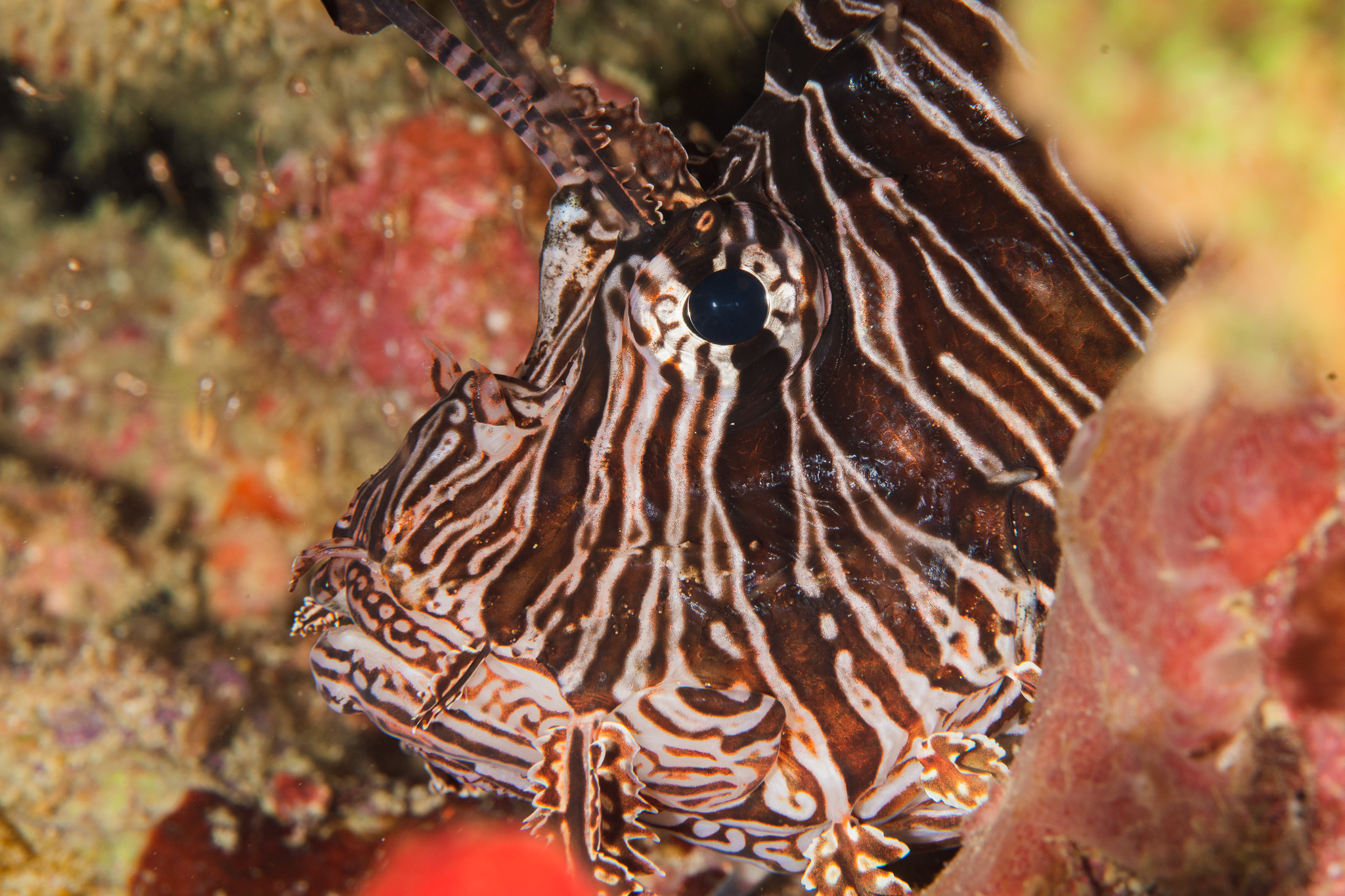
Nothing here evolved to deal with them. Atlantic groupers and sharks didn't grow up alongside lionfish, and reef fish have no instinct to flee a slow-moving, fan-finned ambush predator they've never had reason to fear - in their native Pacific range, generations of exposure taught local fish to keep their distance. Here, a lionfish can hover motionless a few inches from a school of prey and simply wait. Eighteen venomous spines along the dorsal, pelvic and anal fins handle whatever predators do take an interest; they're a defense against being eaten, not a hunting weapon, but they work well enough that almost nothing in the Atlantic tries twice.
They also breed relentlessly. Females release eggs every few days, essentially year-round in warm water, adding up to well over a million eggs annually by some estimates - a figure worth confirming against NOAA or USGS directly rather than whatever's circulating on dive forums, since it gets rounded differently depending on the source. They mature within a year and can live well over a decade, which means a single reproductive female can be adding to the population for most of that lifespan.
They'll eat almost anything that fits in their mouths, including juvenile snapper and grouper - the same fish South Florida's reefs and its fishery depend on. NOAA's own framing is blunt: a thousand lionfish can consume millions of prey fish in a single year. Stomach-content studies have turned up dozens of different prey species in a single population, which is a level of dietary flexibility most native predators don't have.
And they tolerate nearly everything - estuaries to close to a thousand feet down, a wide range of temperature and salinity that would stress most reef fish. Documented densities in the invaded Atlantic run far above anything ever measured in their native Pacific range, where their own natural predators, parasites and competitors keep them in check in ways that simply don't exist here yet.
Where you'll find them
The invaded range now runs from the US southeast coast through the Gulf of Mexico, across the entire Caribbean, Bermuda, and south to Brazil - covered in under three decades from what genetic evidence suggests was a single point of introduction. Almost nowhere in the western Atlantic's reef habitat has been spared.
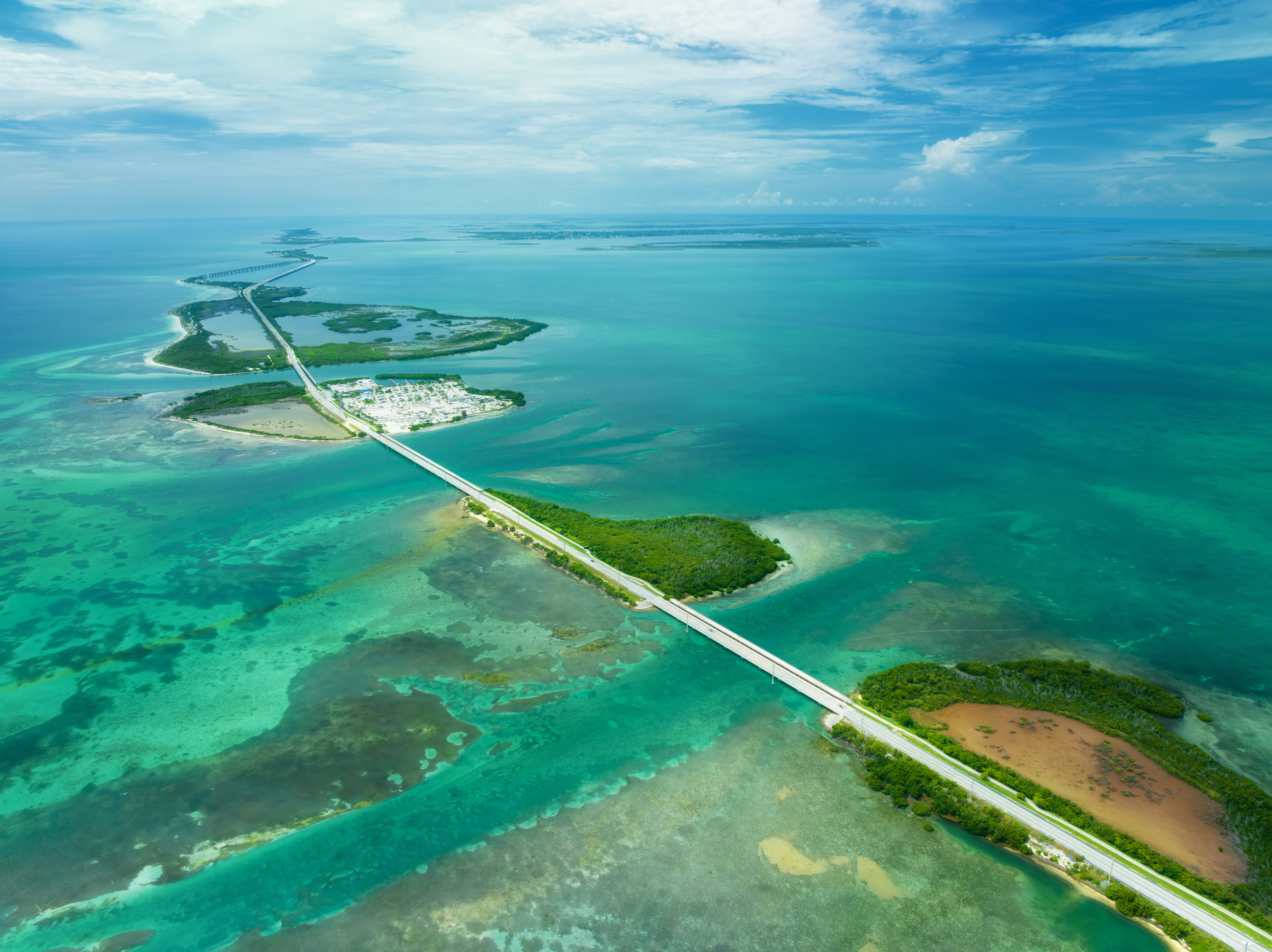
Locally, they favor exactly the terrain our wreck and reef diving is built on: ledges and artificial reefs off Palm Beach and Pompano, the deep wrecks that anchor half the itineraries on this site, and the patch reefs running through the Keys. Structure and overhangs are lionfish habitat by definition - the same ledges and swim-throughs divers seek out for the scenery are exactly where a lionfish wants to sit and wait.
The real problem is the depth they retreat to. Lionfish live well below recreational dive limits - populations have been documented past 300 feet, deeper on some equipment than almost any recreational diver will ever go - and those deep, unreachable populations continuously restock the shallow sites divers actually clear. That's the key point of this whole piece: removal reads as a maintenance program on a given reef rather than a war anyone wins outright. And it's still worth doing, because local removal efforts demonstrably reduce lionfish density and measurably help native fish recover on the reefs where they happen, even though the deep refuge feeding new arrivals in behind them isn't going anywhere.
Get trained before you spear anything
A spear alone isn't the answer - safe capture, handling and species identification all take real instruction first, and going in without it is how people get stung. A few starting points:
REEF Collecting & Handling Workshop - classroom time on biology, impacts and current research, then a two-tank dive putting it into practice with an instructor watching your technique. Free, gear provided, run periodically around Southeast Florida and the Keys. Advanced certification and roughly 30 logged dives are typically expected before you sign up.
PADI Invasive Lionfish Tracker specialty - the card-carrying route, taught by shops across Miami, Fort Lauderdale and the Keys, covering safe capture, containment and handling over a couple of dives with your own instructor.
FWC Lionfish Challenge - Florida's season-long removal program, with recreational and commercial divisions and tiered prizes as your count climbs. The 2026 season ran May 22 through September 14; check FWC's site directly for next season's dates once they're posted, along with current registration requirements.
None of these require you to already own a spear or a containment tube - most workshops either provide gear for the day or point you toward what to buy once you're trained, which is the right order to do it in.
Do it cleanly and responsibly
Dispatch, don't wound. A clean shot with a pole spear or sling, followed by a proper spike through the brain - the same iki-jime principle spearfishers use on other species. A fish left injured and drifting on the reef is a failure, not a removal, and it's worse for the reef than leaving the fish alone in the first place.
Use a containment tube - a ZooKeeper-style tube gets the fish off your spear and out of the water without exposing anyone on the boat to a sting, and it keeps a live, agitated lionfish from doing more damage on the way up than it did on the reef. And never feed your catch to sharks or eels on the dive, tempting as the photo op is: it teaches large animals to associate divers with an easy meal, which has already caused real problems - including aggressive behavior toward divers - at popular sites where it became a habit. Removal means removal, not a hand-feed with extra steps.
The spines stay venomous after death, so treat every fish in the tube and on the cutting board as if it were still live - stings from supposedly-dead lionfish on the dock are a recurring, entirely preventable injury. If someone does get stung, the standard first aid is hot-water immersion - as hot as the person can tolerate without scalding - plus medical attention for any severe or allergic reaction; the venom is a protein, and heat breaks it down effectively in most cases. Confirm current guidance with a medical source like DAN rather than a forum before treating this as settled advice.
Then eat it. The flesh is excellent and completely safe - white, mild and flaky, closer to grouper than anything you'd guess from the fish's reputation. The venom lives entirely in the spines, not the fillet, and once those are trimmed away by someone who knows what they're doing, a lionfish is just very good dinner. Eat 'em to beat 'em is the honest closing note, and it's not just a slogan: every one on a plate is one that isn't back on the reef spawning next season.