Dive Sites
Browsing as a guest. Create a free account to save trips and plan dives.
+4 photos

Eagle

Wreck · Islamorada

24° 52.180' N 80° 34.210' W

Advanced Open Water Advanced Open Water Max 110 ft Avg 105 ft Permanent Mooring Balls Today AMNo dive

Details

Advanced Open Water
Minimum recommended certification
Max depth
110 ft
Average depth
105 ft
Access
Permanent Mooring Balls
Sea state today
AMNo dive PMNo dive

Video

🎥 FloridaKeysTV

Pictures 7

Where it is

24° 52.180' N 80° 34.210' W

Next boats to this site 36

See all departures

Operators that dive here

Best Gas

atm
atm
Overlay Image
Gas prices
Aluminum 80 $10
Steel HP 100 $10
Steel LP 85 $10

Wreck Details

Sunk December 19th, 1985
Freighter
287 ftLength
? ftBeam

Site description

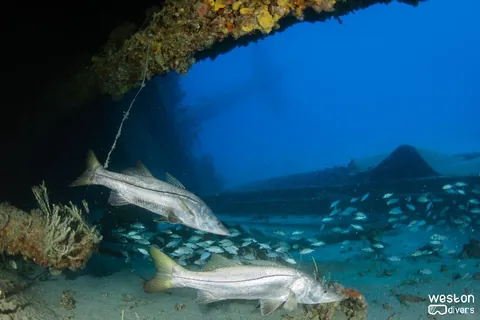
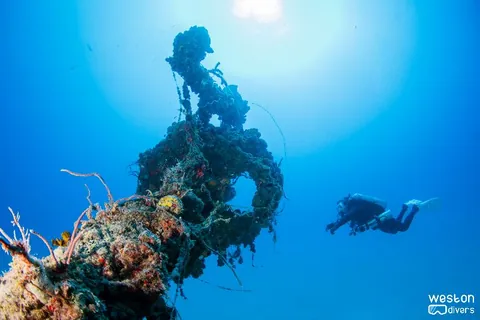
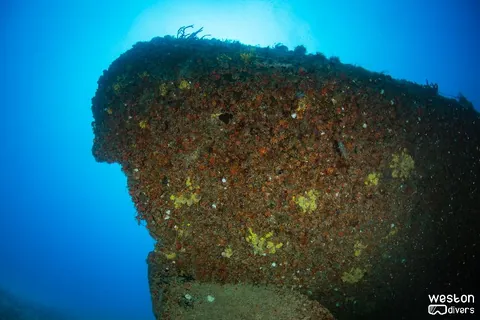
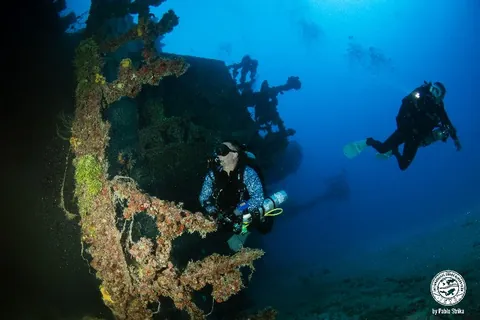
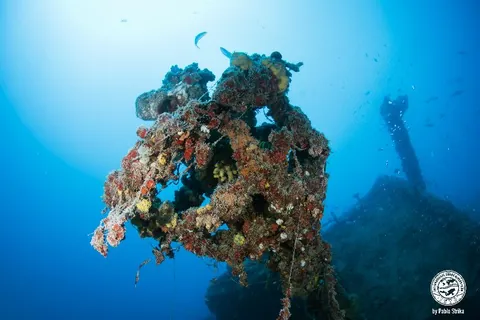
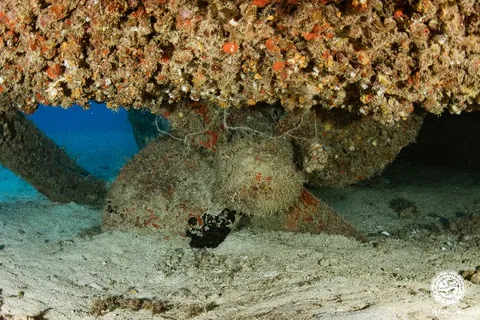
The wreck of the Eagle is a 286 ft long freighter that sits off the coast of Islamorada, FL. The ship was prepped and scuttled on December 19, 1985, in the Florida Keys National Marine Sanctuary. Although intended to settle at a specific location, the Eagle broke free during the sinking process and was ultimately allowed to sink where she presently lay. With the help of explosives, she descended to her final resting place on her starboard side in just 90 seconds. The Eagle lies at a depth ranging from 65 to 110 feet, making it an advanced dive site. The wreck has become a thriving artificial reef, attracting a diverse array of marine life. Divers can explore the split hull, a result of Hurricane Georges in 1998, and encounter species such as tarpon, goliath groupers, schools of grunts, and jacks The Eagle is celebrated for its rich marine life and the dynamic underwater landscape it offers. The wreck’s structure provides shelter and habitat for various species, contributing to the site’s reputation as one of the top wreck dives in the world. It’s a popular spot for both divers and fish, and the clear waters of the Florida Keys make it an unforgettable experience for those who visit.

Route & typical conditions

Route

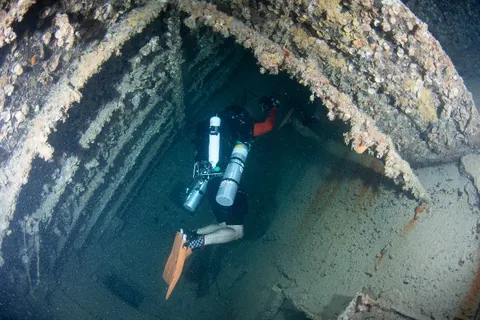
There are 3 permanent mooring balls installed on this site. Depending on where the operator parks the boat, divers can choose different routes. The wreck, although upright and most intact, is split in two sections: the bow and the stern. Divers may do a lap to recon the wreck and then attempt penetration. The stern is probably the most interesting section as divers can try penetration to get to the engine room. Divers should be mindful that the stern is slightly tilted to its port side and once inside the structure divers may get disoriented. There is an opening in the hull that grants access to the engine room - often guarded by a goliath grouper.

Typical conditions

Conditions vary a lot in this site. Currents can be present at the site. Divers should expect mild to moderate currents. Visibility is often good (50 feet an above), but occasionally can drop to less than 30 feet.

Wreck history

Eagle historic photo
The Eagle, a 287-foot freighter, traversed the seas under its original name, the Aaron K, primarily ferrying scrap paper between Miami and various South American ports. In 1985, disaster struck when a fire ravaged the ship’s electrical system, leading the insurance company to write it off as a complete loss. Anchored in the Miami River, the vessel remained idle until October of that year. It was then that a coalition of local diving enthusiasts, dive shop owners, and organizations—including the Monroe County Tourist Council, the Artificial Reef Committee, and several local businesses—came together to raise $10,000. This fund was not only to acquire the ship but also to undertake the extensive cleaning required to prepare it for its next chapter. On the 19th of December, 1985, the Miami and Dade County Bomb Squad expertly placed explosives aboard the vessel. The detonation was swift and precise, plunging the Eagle to the ocean floor in a mere 90 seconds. Now, the ship lies on its starboard side, its bow oriented towards the shoreline. Nestled in 120 feet of water atop a sandy seabed, the Eagle’s final resting place is a sight to behold. Its expansive cargo holds have transformed into cavernous spaces, where schools of fish weave in and out in a mesmerizing dance. Divers visiting the site can expect a gentle current to guide them along the wreck, with visibility fluctuating between 50 to 100 feet, offering a clear window into this underwater sanctuary.

Divers' uploaded pictures

No diver pictures yet.

Divers' reviews

Be the first to add a review