Dive Sites
Browsing as a guest. Create a free account to save trips and plan dives.
+1 photos

Pickles

Reef · Key Largo

24° 59.459' N 80° 24.897' W

Open Water Open Water Max 30 ft Avg 10 ft Permanent Mooring Balls Today PMNo dive

Details

Open Water
Minimum recommended certification
Max depth
30 ft
Average depth
10 ft
Access
Permanent Mooring Balls
Sea state today
AMNo dive PMNo dive

Video

🎥 markhewitt13

Pictures 4

Where it is

24° 59.459' N 80° 24.897' W

Next boats to this site 22

See all departures

Operators that dive here

Best Gas

atm
atm
Overlay Image
Gas prices
Aluminum 80 $10
Steel HP 100 $10
Steel LP 85 $10

Site description

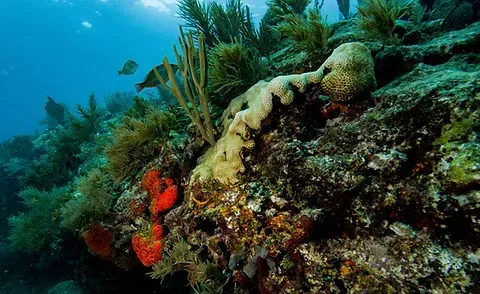
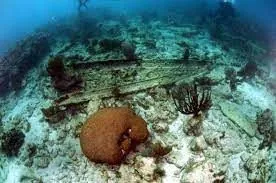
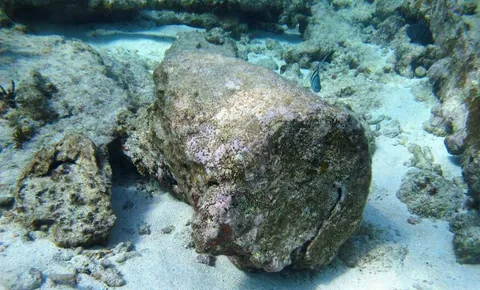
The beacon labeled as “F” at Pickles Reef is situated 5.7 nautical miles east-southeast from Key Largo. Nearby anchorages at Tavernier and Rodriguez Keys offer shelter for sailing craft in the area. The beacon lies within the reef’s barrier grooves, positioned to the south by southeast in water ranging from 6 to 10 feet deep. The site features three piles embedded in the seafloor. Two of these piles measure 11 feet in length, both angled at 60 degrees. The third pile is slightly less angled and stands at a height of 3.5 feet. Archaeologists speculate that the sharply canted piles resulted from storm waves impacting the beacons. Notably, one of the 11-foot piles has a disc-shaped flange, suggesting it was a tri-vane variety that replaced the single vane beacon represented by the other 11-foot pile. The 3.5-foot-long pile played a role in securing the tri-vane beacons. Fascinating historical context, isn’t it? 😊 As for Pickles Reef itself, it’s a shallow reef crest-back reef zone with relatively flat outcrops of reef structure or framework. The area enjoys mostly clear water, and during surveys, researchers discovered more species and denser populations of benthic organisms compared to the beacon sites documented further south. Among the findings were mustard hill coral (Porites astreoides), encrusting fire coral (Millepora alcicornis), and soft corals like sea fans, sea plumes, and sea rods. Additionally, several sponge varieties were present, along with numerous fish and invertebrate species. Nature’s diversity never ceases to amaze!

Route & typical conditions

Route

The route depends on the ball the operator chooses, but divers will be required to return to the boat - typically this site is not conducted as a drift dive.

Typical conditions

As many other shallow locations in this area, conditions are typically good. Visibility can be affected by surface conditions and so divers may feel a strong surge if choppy.

Divers' uploaded pictures

No diver pictures yet.

Divers' reviews

Be the first to add a review