Why I Want James Blackman on the Boat
The part his website cannot tell you
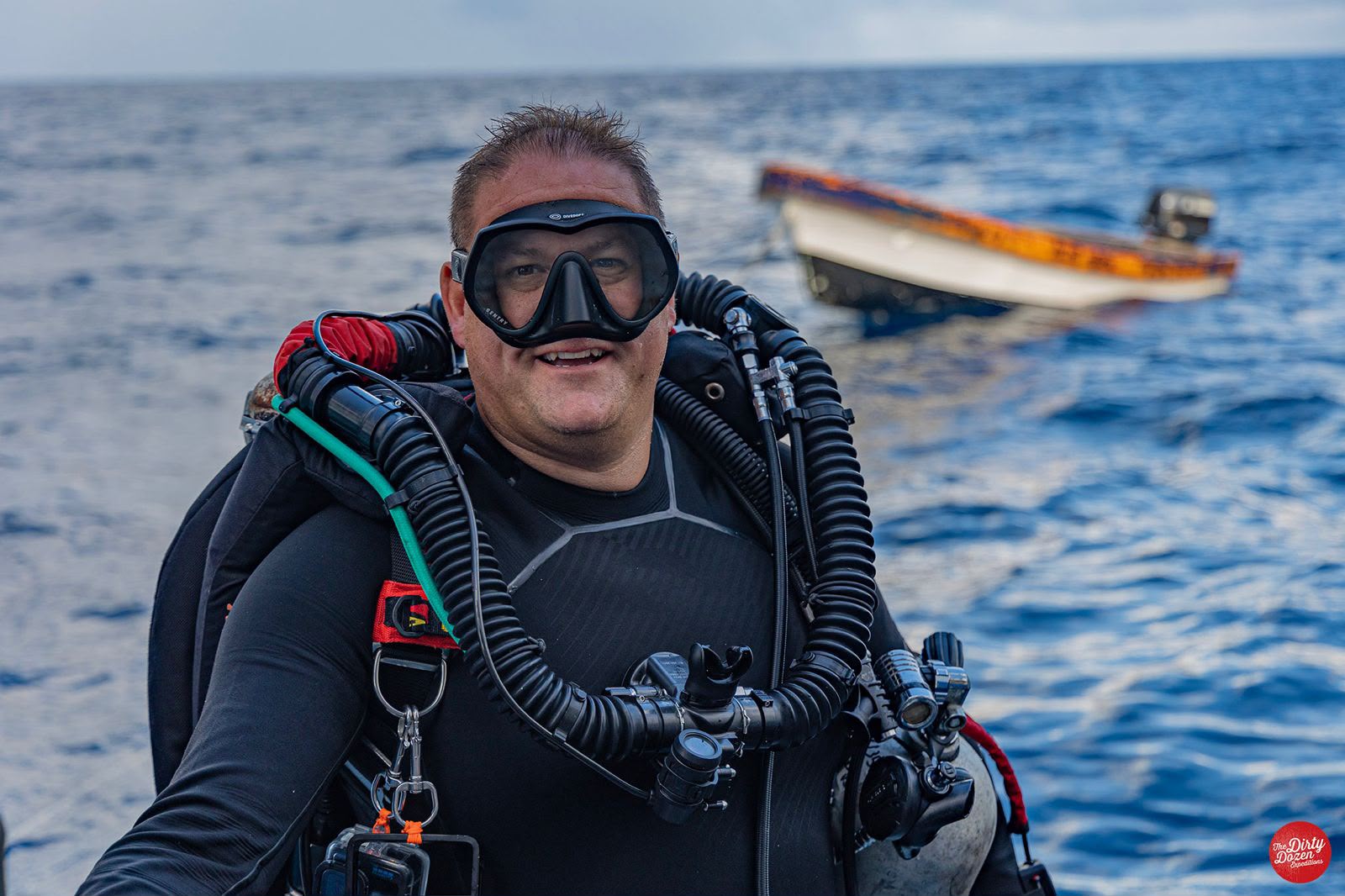
James and I have dived together plenty of times here in South Florida, including the Spiegel Grove and the Northern Lights, and he has trained a good number of my dive buddies. So I can tell you the thing his website cannot: he is as good a dive buddy as he is an instructor.
That distinction matters more than people realize. Plenty of excellent instructors switch off the moment the course ends. James does not. On a boat he is the one checking that everyone is sorted, not just the people paying him, and he is a teacher by nature rather than by occupation. When he is aboard, the day is both safer and more fun. Those two things are supposed to be in tension. With the right person on the boat, they are not.
If you have ever searched for how to deploy an SMB, whether you should buy a long hose, or what actually happens inside a rebreather, there is a good chance you have already watched one of his videos without knowing he teaches twenty minutes from your local shop.
Who he is
By his own account, James has spent two decades in diving and worked on all seven continents. The path reads like a map: the British merchant marine, a rescue diver certification in Tanzania, divemaster in Indonesia, instructor training in Honduras, technical instructor qualifications in the French West Indies. He also briefly held the record for the most northerly scuba dive, at 82 degrees north in the Russian Arctic.
He describes himself now as a recreational, technical and closed-circuit rebreather instructor with a particular interest in technical wreck diving, which is a useful specialty to have parked in South Florida, where the wrecks are the whole point.
What Divers Ready actually is
The channel is built around one stated goal: to make you a better and safer diver. It sorts its material by where the diver is rather than by what it is selling, with videos for new divers, advanced divers and technical divers, plus gear reviews, travel, underwater photography, and a strand aimed at other instructors.
That last part is worth noticing. A channel that teaches teaching is a different animal from one chasing views with shark footage. A real slice of the audience is working dive professionals, and the content is shaped accordingly.
The teaching, and the philosophy behind it
The instruction runs through Miami Technical Diving, where James teaches one-to-one or one-to-two. No group classes.
The course list is squarely technical: Advanced Nitrox, Decompression Procedures, Helitrox, Trimix and Advanced Trimix, Advanced Wreck, and closed-circuit rebreather training, alongside recreational courses and specialties including search and recovery, public safety diving and underwater media.
The stated approach is the part worth repeating to anyone shopping for technical training: keep quality as high as possible, use the best gear available, and teach beyond the minimum standards.
That last phrase is the one to understand. Every agency publishes minimum standards, and a course that meets them is, by definition, a legal course. Minimums are a floor, not a target. Diving that puts a ceiling of water over your head, which is exactly what technical diving does, is where the gap between a floor and a good instructor becomes the whole thing.
I have watched the output of that approach surface in my own circle. The friends of mine he has trained came back diving differently, and not in the way people do when they have simply collected another card.
Why this matters if you dive here
South Florida is a technical diving environment whether or not anybody tells you that.
The wrecks that define our diving sit deep. Lady Luck, the Spiegel Grove, the Vandenberg and dozens of lesser-known structures have sand at depths that put a recreational diver at the edge of their limits while the most interesting parts of the wreck are still below them. Add the Gulf Stream, add a penetration, and you are describing dives that reward training most divers here have never done.
The usual progression is that a diver falls in love with wrecks, dives them for a few years at the bottom of their comfort zone, and then starts wondering what it would take to do it properly. That question is what technical instruction answers, and having someone of this calibre teaching locally means the answer does not require a flight.
Where to start with the channel
If Divers Ready is new to you, start with the material that matches the diving you already do rather than the diving you aspire to. The recreational videos on buoyancy, gas management and SMB deployment are the ones that improve your next dive. The technical content is worth watching long before you are ready to take a course, mostly so that when you do, you arrive knowing what the questions are.
And if you are an instructor yourself, the teaching-focused material is the part of the channel almost nobody else is making.
Divers Ready, the channel and training site: diversready.com
Miami Technical Diving, the local training operation: miamitechnicaldiving.com
The local point
We spend a lot of time on this site pointing at boats, conditions and sites. The other half of diving well here is who is teaching you, and South Florida is unusually well served in a way locals take for granted.
Knowing who is teaching in your own backyard is worth as much as knowing which wreck is diveable this weekend. And if you end up on a boat with James, you will see what I mean before the first dive is over.
Dive these sites
- 1
- 2
 AOW
AOW
 Tn
Tn