Dive Sites
Browsing as a guest. Create a free account to save trips and plan dives.
+2 photos

Duane

Wreck · Key Largo

24° 59.380' N 80° 22.920' W

Advanced Open Water Advanced Open Water Max 118 ft Avg 105 ft Permanent Mooring Balls Today PMNo dive

Details

Advanced Open Water
Minimum recommended certification
Max depth
118 ft
Average depth
105 ft
Access
Permanent Mooring Balls
Sea state today
AMNo dive PMNo dive

Video

🎥 Sink, Florida, Sink!

Pictures 5

Where it is

24° 59.380' N 80° 22.920' W

Next boats to this site 56

See all departures

Operators that dive here

Best Gas

atm
atm
Overlay Image
Gas prices
Aluminum 80 $10
Steel HP 100 $10
Steel LP 85 $10

Wreck Details

Sunk November 27th, 1987
Cutter
327 ftLength
41 ftBeam

Site description

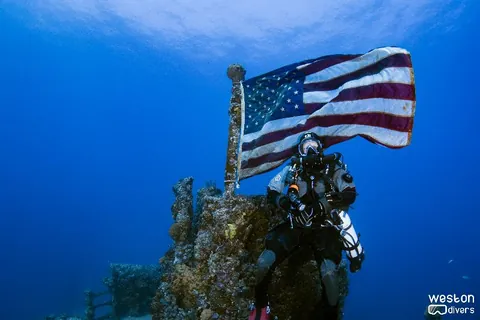
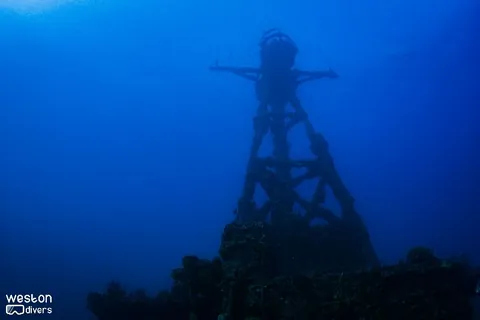
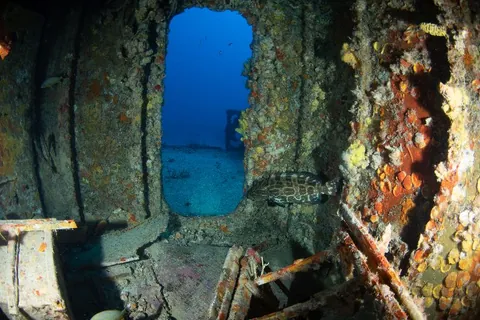
The SCG Cutter Duane (WPG33), a decommissioned Coast Guard cutter, now rests as an artificial reef in the depths of the Atlantic Ocean. Its transformation from a vessel of service to an underwater sanctuary has created a captivating environment for divers and marine life alike. The Duane spans an impressive 327 feet, making it a substantial wreck to explore. On November 26, 1987, the decision was made to intentionally sink the Duane, positioning it as an artificial reef off the coast of Florida. The wreck lies at a depth of 125 feet, with the highest point (the Crow’s Nest) at 60 feet. Divers spend most of their time touring the main deck, which sits at approximately 105 feet deep. Due to its proximity to the Gulf Stream, the Duane experiences strong currents. These currents can make diving challenging but also contribute to the rich marine life surrounding the wreck. As you descend, you’ll encounter schools of fish that have made the wreck their home. Expect to see Great barracuda, Atlantic spadefish, yellowtail snapper, goliath grouper, nurse sharks, and reef sharks. Occasionally, large Bull Sharks and even a rogue Great Hammerhead Shark grace divers with their presence. Some lucky souls have even captured photographic evidence of Great White Sharks and massive Whale Sharks near the wreck! For divers seeking to maximize bottom time and reduce nitrogen absorption, using enriched air Nitrox is recommended. However, exercise caution with the mooring lines during descent, as fishing boats frequent the area and may leave behind hooks and lines. Stay informed about current conditions before planning your dive. Remember, exploring the Duane isn’t just about diving; it’s about immersing yourself in a piece of maritime history and witnessing the resilience of nature as it reclaims this sunken vessel. For more details and updates, you can check reputable diving websites or local dive shops. Happy diving!

Route & typical conditions

Route

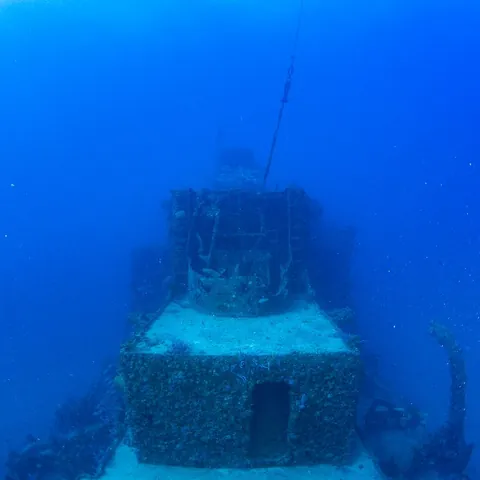
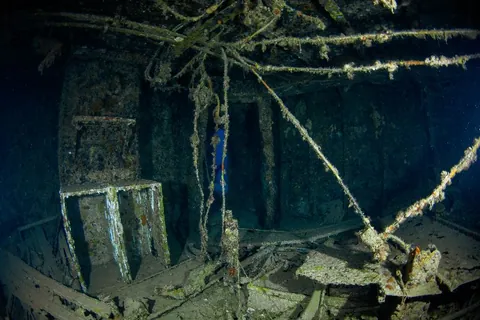
The route depends on the ball where the operator has parked. Although divers can get a good feeling for the wreck in only one dive, it will take at least two dives to get to see most of what the Duane has to offer. There are several swims through at midship and in the bow area for those qualified to penetrate. The engine room is even accessible but it's definitely something divers may not attempt in the first dive. The sand level offers very little and divers are encourage to stay at the main deck level to maximize their dive time.

Typical conditions

Conditions vary in this site. Currents tend to be strong and it is not unheard of operators reaching the dive site and calling the dive due to currents. Visibility can also be affected, but in general divers may expect 40 feet plus visibility.

Wreck history

Duane historic photo
The U.S. Coast Guard Cutter Duane, originally named the William J. Duane after Secretary of the Treasury under President Jackson, has a rich history. Built at the Philadelphia Navy Yard in Pennsylvania, her keel was laid on May 1, 1935, and she launched on June 3, 1936. Commissioned on August 1, 1936, the Duane measured 327 feet in length, with a 41-foot beam and two Westinghouse double reduction geared turbines powering her. Her formidable armament included three 5-inch guns, three 3-inch guns, fourteen 40-mm guns, and eight 20-mm guns. Initially stationed in California, the Duane was later transferred to the East Coast in 1939. During World War II, she played a significant role, credited alongside her sister cutter Spencer for sinking the German submarine U-175. In 1944, the Duane served as a flagship during the allied invasion of Southern France. Subsequently, she contributed to coastal surveillance efforts during the Vietnam War. One remarkable rescue mission involved the Duane saving 250 survivors from the Dorchester. This heroic operation lasted three days, from February 3rd to the 6th. Additionally, the Duane participated in escorting boats filled with refugees during the 1980s Cuban boat lifts. On August 1, 1985, the Duane was decommissioned. It was then purchased, along with its sister ship, the Bibb, for $160,000. The funds were raised by the Monroe County Tourist Development Council and local dive shop donations. After thorough decontamination and removal of hatches, the Duane was intentionally sunk near Molasses Reef—an Army Corps of Engineers approved site—on the evening of November 27, 1987. The Bibb, her sister ship, followed suit the next day, and both wrecks now lie just 100 yards apart. Resting upright and intact, the Duane sits at a depth of 118 feet. Divers can reach her crow’s nest at 60 feet and explore her wheelhouse at 80 feet. The main decks are found at 98 feet, and the bow points southeast. The Clear Gulf Stream sweeps over the site, providing visibility that can reach up to 200 feet, although it typically ranges from 30 to 80 feet. Strong currents are common. Diving the Duane requires advanced training and experience due to the depth and prevailing currents. The wreck has become a dynamic dive site, attracting a diverse array of marine life. According to Mark Christiansen, schools of massive barracuda—some measuring three to five feet in length—are a common sight on almost every dive. Remember that penetrating any shipwreck should be done only by those with proper training, experience, and specialized wreck diving equipment. Essential gear includes powerful dive lights, navigation reels, dive knives, and redundant air supply (such as a pony bottle or doubles).


Divers' uploaded pictures

No diver pictures yet.

Divers' reviews

Be the first to add a review